

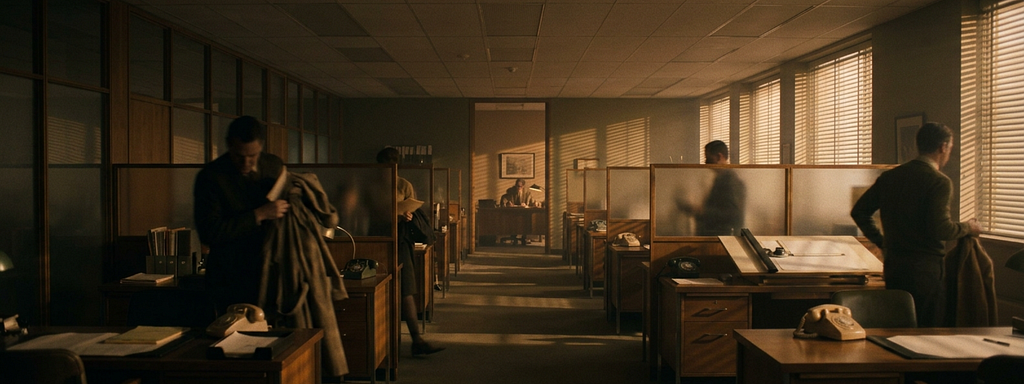
The rituals of the 1960s ad shop — the whiskey, the pitch room, the account man, the campaign— still shape how UX teams fail in many environments. We have to change that.
Auteur: a film director who holds primary creative control and stamps a distinct, recognizable personal style, vision, and thematic focus across a body of work, much like a novelist or painter.
Walk into a mid-century advertising office and you would see the whole apparatus of modern creative work already assembled: the pitch room, the account man, the campaign, the auteur with the corner office.
I can almost remember the smell of peaty whiskey and stale cigarettes from one of the my favorite shows ever, Mad Men, and I also recall how it characterized advertising in a way that many agencies did for user experience.
And that stung.
https://medium.com/media/5977678cd2e937c6de65da53d7ee8211/href
Decades later, when user experience needed a business to belong to and a way to look serious, it borrowed the entire kit — the deck, the client, the reveal, the portfolio showcase.
We inherited the craft, and the habits bundled with it.
Agency work isn’t what I like doing and you might see some of the framing here; I also believe UX deserves a better future and the numbers prove the value.
Design creates real, measurable outcomes when the right choices land in front of users and organizations: McKinsey’s research on the business value of design found that the strongest design performers posted 32 percentage points higher revenue growth and 56 points higher shareholder returns than their peers over five years, mainly with in house teams.
And at a time where the cost of execution drops like a rock, the right decisions matter more than ever.
That value appears only where design understands the domain, is measured like revenue, integrated across the business, and iterated with real users over time.
Embedded so everyone could learn together.
That approach is precisely why many agencies are not built to sustain when the project goes out for request for proposal. The pitch, the account, the campaign, the auteur, and the revolving door gave UX its polish and quietly hollowed out its practice in a time when product is king.
I’m saying for a lot of work that the giants did was valuable and we still use it today; however it might not be the model we should move forward with.
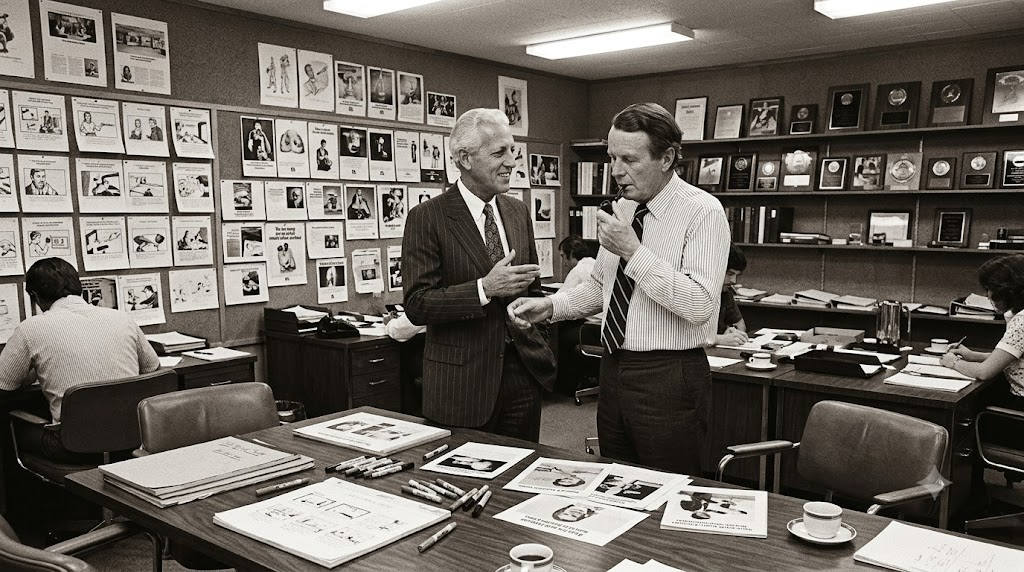
David Ogilvy built his agency on research-driven, respectful persuasion — the long copy and big idea that treated readers as intelligent. Jay Chiat championed creative risk and account planning, giving strategy a seat beside art.
Together they proved advertising could be both disciplined and daring, reshaping how agencies think, sell, and create. But even Ad Week pointed out in 2019 the hero culture and operating model was shifting before generative AI took a seat.
Their approach does have it place and many UX professionals have adopted them; however they may no longer apply when generative AI can make the artifacts in minutes or billable hours disappear in value based billing.
Here are the outcomes we have to change — it’s no longer acceptable in many cases to talk about the potential where there’s no tangible outcomes, especially if projects go on for a very long time and a lot of money has been spent.
The prestige of that lineage is real but now outdated, which is exactly why almost nobody names the cost to where we are at today.
Hype Over Practice
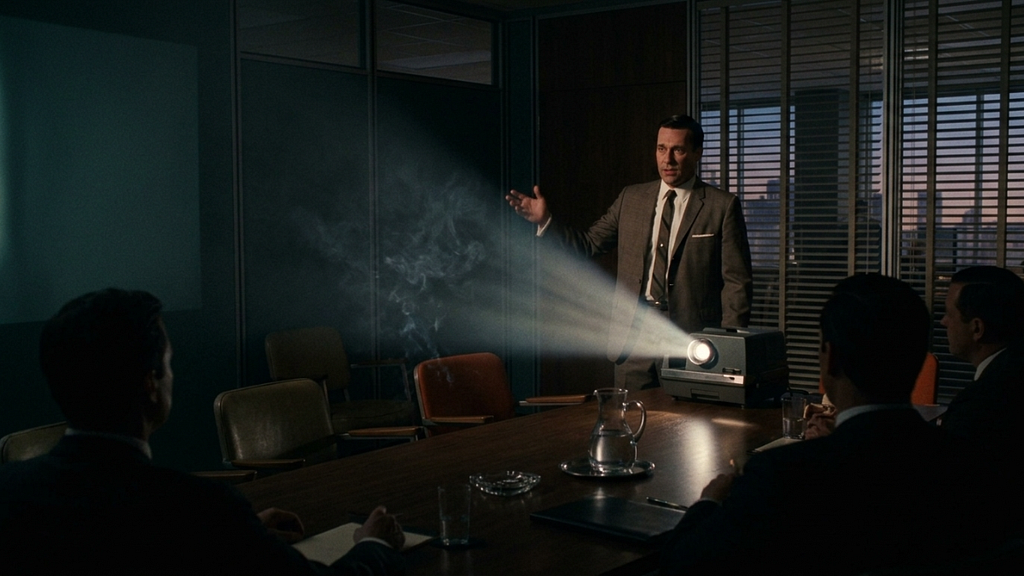
The most famous scene in Mad Men is a pitch.
A creative director stands in a darkened room clicks through a slide projector, and turns a piece of hardware into a time machine — reframing a product nobody needed as a vehicle for nostalgia to remember times that have gone by, like a magical time machine.
https://medium.com/media/f1f6fb5e4186f8424ec41ab4d39ec215/href
The wheel.
“It’s not called the Wheel. It’s called a Carousel. It lets us travel the way a child travels. Around and around, and back home again… to a place where we know we are loved…Technology is a glittering lure. But he also talked about a deeper bond with the product: nostalgia. It’s delicate but potent.”
This is a masterclass in selling a dream and it is also the original sin.
The room learns that the performance is the product, the applause is the deliverable, and the user has been sold a bill of goods that will never be delivered. Those masterclasses are over at Entertainment Weekly — it’s a great read, but it can show that selling a dream can sometimes be more important than delivery itself.
UX absorbed that lesson completely.
We learned to optimize for the pitch: the big presentation, the polished prototype, the file that photographs well on a Tuesday but has aged poorly by Friday.
The unglamorous practice we should be striving for as practictioners— the eighth usability session, the accessibility fix nobody claps for, the maintenance that keeps a system honest, the focus on affordances that can change the lives of user — has no stage and earns no ovation, and that’s where real user value is.
It’s the selling of something that isn’t connected with an example of measurable outcomes.
Big hat, no cattle no longer has its place in many places for UX. We have to change that.
I’ve argued before that much of what we ship are tool-shaped objects: artifacts that produce the feeling of work without doing the work, the readout written before the research, the deck that persuades a room of something that is untrue. The pitch taught designers that persuading the room is the work, when the work is what happens after everyone leaves it.
That confusion is expensive. A team can win every review, ship a beautiful thing, and move a metric not at all — and in a pitch culture nobody notices, because the metric was never the point. Output over outcome.
The point was the moment the lights came up and the client nodded.
You can hear the reflex in how designers describe their careers: the portfolio is a highlight reel of reveals created before the work was really done, not a record of outcomes.
The agency taught us to sell design so well that we forgot selling it was the easy part.
Clients Over Users
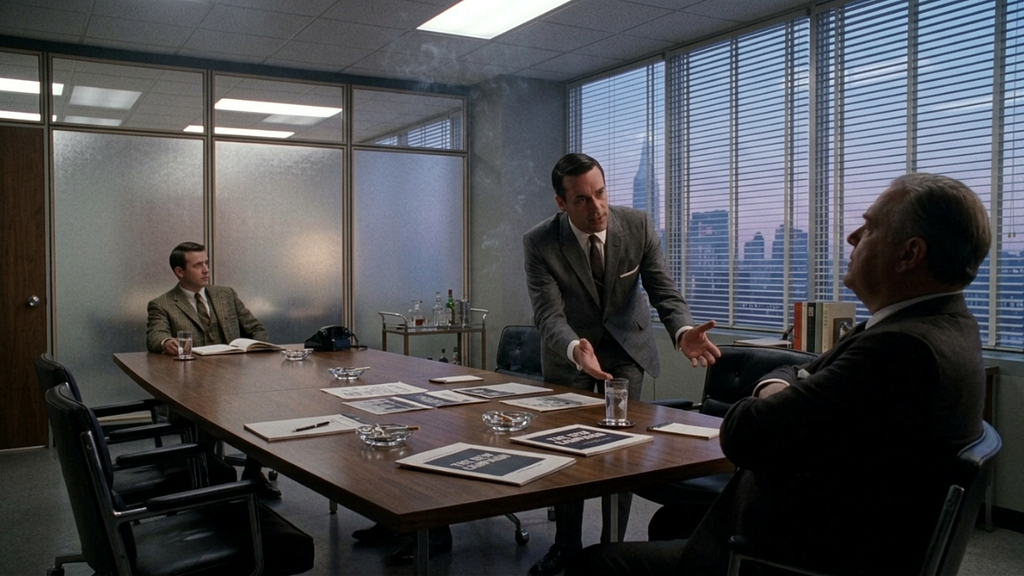
Every agency has an account man. In Mad Men he is Pete Campbell — smooth, ambitious, forever managing the client’s feelings so the creative work can survive contact with the person paying for it.
The account model is not a villain; it is a structure, and the structure has a fixed center of gravity: the client, not the user. The account exists to keep the client happy, because the client is the one who renews.
Marty Cagan drew the sharpest version of this distinction with missionaries versus mercenaries. Mercenaries build what they are told; missionaries own the problem and will argue with you about it.
Agencies are structurally mercenary — not because agency people lack conviction, but because the business model rewards delivering what the client asked for, on time, on budget, on brief.
Agencies are structurally mercenary; they serve the person who signs the check, and the user is whoever the client says the user is.
UX carried that reflex in-house and never quite set it down.
We still call the loudest stakeholder “the business,” still treat a vice president’s hunch as a requirement, still ship the thing that was asked for and quietly file the research that disagreed in a place it cannot be discovered. The account model trained us to confuse client service with design — to believe a satisfied room means a solved problem. The two come apart more often than we admit.
The client can be delighted and the user still stuck.
Someone in the room has to be loyal to the person who never gets a seat at the table, and agency culture never hired for that job.
Deliverables Over Outcomes
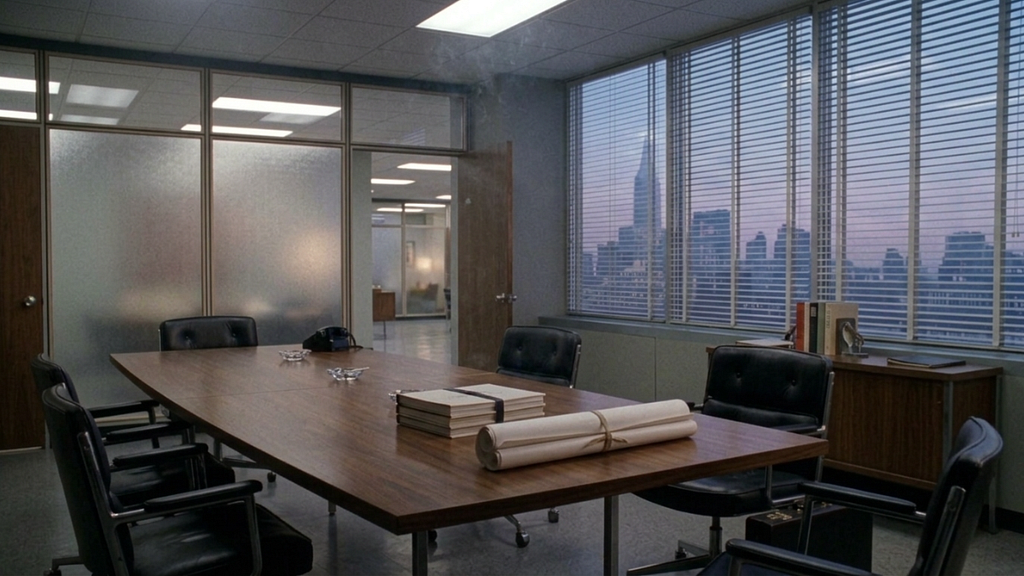
Agencies sell campaigns. The campaign is the unit of work — the thing that gets scoped, invoiced, presented, and, this is the key part, handed over. The agency ships the deliverable and moves to the next account. Whether the campaign worked is somebody else’s problem, measured after the invoice clears, if it is measured at all.
That model came into product design almost intact.
We scoped deliverables: the user journey, the workshop, the wireframe, the redline, the design system component, the handoff, the work about the work that wasn’t really the work. We measured ourselves by what we produced rather than by what changed, which struggles to survive in the world of AI.
It’s a world worth of portfolio reviews for how we measure today, even when we know the numbers in their portfolio are falsified to get past the interview panel.
John Cutler named it when he described the feature factory — teams that ship and ship and ship with no measurement other than the number of features shipped rather than delivered outcomes. You can invoice a deliverable; you cannot invoice an outcome in this model, so the agency learned to sell the thing it could bill for.
Design inherited that invoice, which is why so many teams can show you a gorgeous artifact and go quiet when you ask what it moved or if it even can be shipped. The deliverable is finished and photogenic; the outcome is slow and often disappointing in impact.
The same research that found top design performers pulling away from their peers points the other direction entirely: measure design with the rigor of revenue and business outcomes, and iterate with users until the outcome is real.
This is the opposite of ship-and-leave.
Auteurs Over “The System”
Don Draper was a genius, and that is the problem.
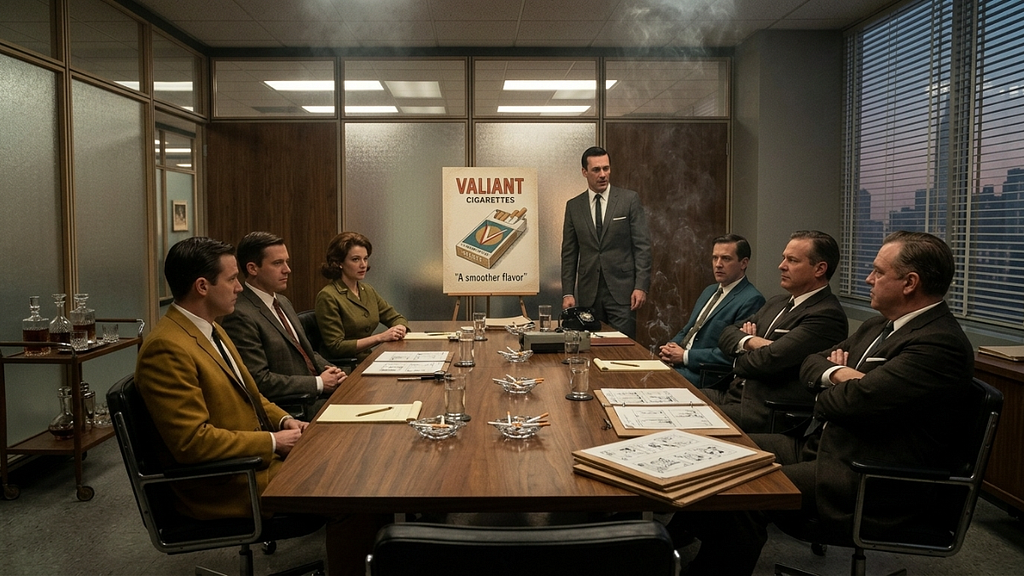
Agency culture organizes itself around the auteur — the singular creative whose taste is the product, whose name in on the door, whose persona wins the account, whose gut overrules the room. It is a seductive model and a fragile one, because it puts everything load-bearing inside one person’s head.
UX imported the auteur wholesale.
We built a star system: the rockstar designer, the portfolio shot with 40,000 likes, the award-show reel, the dribble portfolio, the presentation that talks about what we haven’t delivered, the person who puts together a framework that he wants to develop only as his own, the designer that want to own the design of the entire enterprise suite without regard to the team they work with.
We taught junior designers that the goal is to become the taste, to be the one whose judgment is trusted without evidence, to be them the one to blame the usability test for the choice.
In doing that, we quietly devalued the least glamorous and most durable work in the discipline — the systems, the documentation, and the shared components that let a hundred people design consistently without the genius in the room.
A system outlives the genius, and that is exactly why the genius culture was never in a hurry to build one that could stand the test of time
Brad Frost’s atomic design made the counter-case concrete: build systems, not pages — small, shared, maintainable parts anyone on the team can assemble, so quality stops depending on who happens to be in the meeting.
The above is so made for the world AI it’s laughable.
Great ideas can come from everyone and collaboration is more important than a designer’s ego when everyone touches the presentation, or the lead that doesn’t trust anything other their work and won’t let others in for feedback which shows a lack of respect for peers in their organization, and consequently the system that makes the company profitable. It is craft distributed for alignment, removing a single point of failure, replaces ego, and survives a resignation. It is craft with collaboration.
The auteur model resists this because a good system makes the auteur optional, the one thing the star was hired never to be.
The boring work goes undone, the knowledge stays trapped in one designer’s taste, and the team relearns the same lessons every time that designer leaves.
We need to change that.
The Churn Erased Institutional Memory
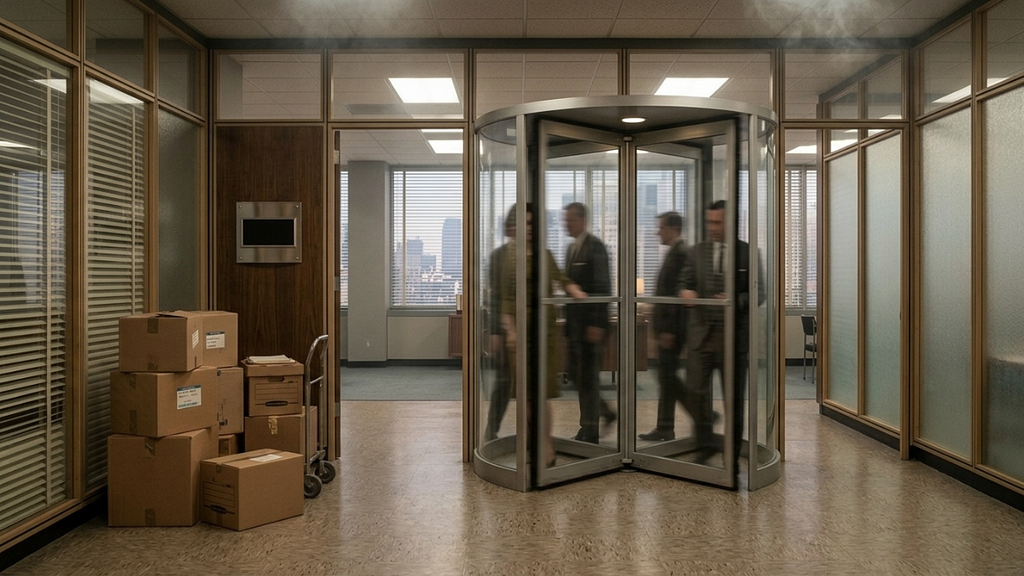
Agencies run on churn.
Accounts turn over, staff turn over, and the new-business engine never stops — there is always a pitch for the next logo, because last year’s logo is already someone else’s problem who bid lower for the account. It is a model built for movement, and movement is the enemy of memory.
Nobody stays long enough to remember what the last team already learned and that rhythm is poison for true research and discovery.
Teresa Torres makes the case in Continuous Discovery Habits that discovery is a weekly practice rather than a one-time project — a team talking to customers every week, building an understanding that compounds. It’s a true learning mindset where the collective knowledge of the organization every time someone talks to a user.
The agency cadence is the reverse: research is a phase you buy at the start of an engagement, run once, present, and never touch again. When the engagement ends, the learning walks out with the freelancers.
We have to work together and learn how not to compete with our co-workers in this new builder world — everyone will get credit if there is true alignment. That’s the goal.

Continuous discovery is a habit you keep so you can be better together over the long run, and churn is how organizations forget everything they paid to learn.
In-house UX absorbed the project shape even without the agency’s excuse for it. We reorganize, set ridiculous boundaries where we freeze out co-workers, we re-scope, and we shuffle designers between squads like a game of musical chairs so they don’t learn the domain and every reshuffle resets the clock on what the team knows about its users. Like an agency.
The cost stays invisible until you look for it.
It shows up as the same usability problem or video rediscovered three times in two years, the persona nobody trusts because nobody remembers making it or even taping it to the wall, and the research repository that quietly becomes a graveyard.
Institutions that cannot remember cannot improve, they only churn.
Draper sold nostalgia as the pain of an old wound, and that is the fair register for this argument too.
Agency culture is not a monster to be slain, it’s what we need to reform: It gave UX its craft, its vocabulary, and its seat at the business table, and plenty of us learned everything we know inside one and now we have to unlearn some of the habits.
The point is not to burn Sterling Cooper down; it is to notice which of its habits we kept without ever deciding to while making sure we should.
Practice design instead of performing it, and measure what the work moved rather than how the reveal landed. Serve the user over the client when the two pull apart, and be the person in the room loyal to whoever has no seat at the table.
The lights come up eventually, but the only question that matters is whether anything real is still standing in the room when they do.
Sterling Cooper built your UX process. We need to redefine it in the age of AI and systems. was originally published in UX Collective on Medium, where people are continuing the conversation by highlighting and responding to this story.


