

How to ship meaningful, human-centered design when the legal team has as much say as the user

There is a particular kind of design meeting that every practitioner in fintech or insurance eventually experiences. You have done the research. The user flows are clean. The friction is down. And then someone from legal or compliance walks in, slides a document across the table, and says: “This all needs to change.”
Welcome to regulated design — where your user is never just one person, and the brief always has a co-author you didn’t choose.
This is one of the most underserved conversations in UX practice. Most design education, most portfolio culture, and most thought leadership is built around greenfield consumer products , the kind where speed and delight are the only constraints. But a significant and growing share of the most consequential digital products in the world live inside regulated industries: banking interfaces that determine whether someone gets a loan, insurance claims flows that decide how fast a family recovers from a crisis, healthcare platforms that carry the weight of clinical decisions. These products demand the same standard of human-centered craft and a set of additional skills that design school rarely teaches.
Having spent years designing in fintech and insurance environments, the author has found that practitioners who thrive in these contexts share one mindset shift above all others: they stop treating compliance as the enemy of good design and start treating it as a design constraint like any other.
The constraint reframe
Every great design lives within constraints. As Don Norman argued in the foundational framing of human-centered design, constraints are not obstacles to creativity — they are its precondition. Material constraints, technical constraints, business constraints: these are the boundaries inside which interesting solutions emerge.
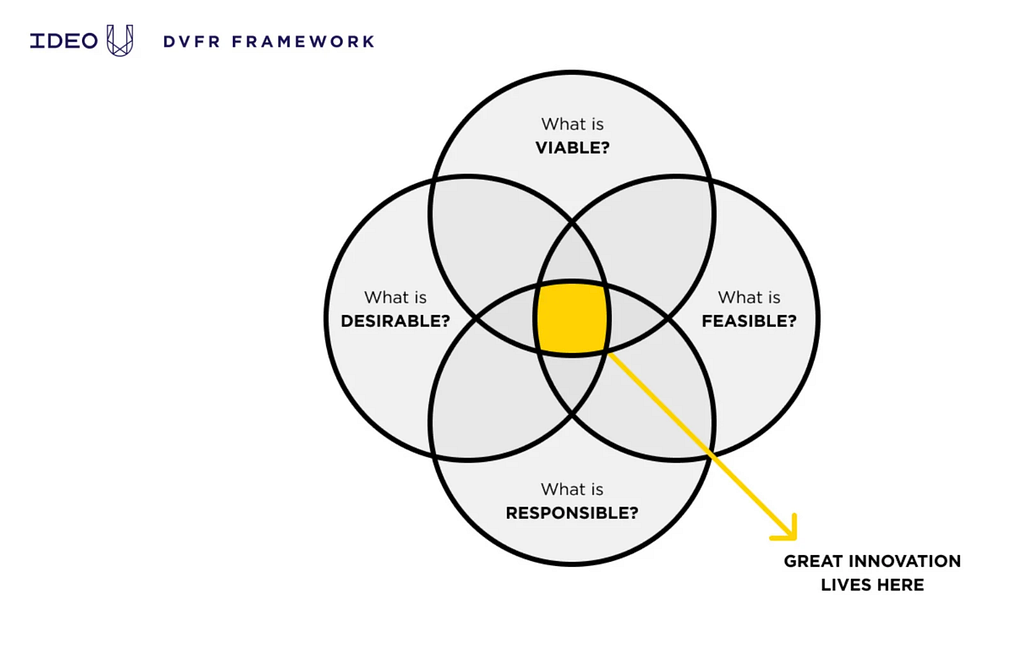
Regulatory constraints are no different. GDPR, HIPAA, PCI-DSS, FCA consumer duty guidelines : these are not adversaries to your user research. They are, in many cases, the codified expression of what users actually need: transparency, security, the right to understand what is being done with their data and their money. The principle of Privacy by Design, for instance, aligns almost perfectly with good UX practice when you actually read it rather than fear it.
The mistake most practitioners make is treating compliance as a late-stage filter — a review step that happens after the design is “done.” This is how you end up redesigning screens three weeks before launch. The practitioners who survive and flourish in regulated environments do the opposite: they pull compliance upstream, into the discovery phase, and treat regulatory requirements as user needs wearing different clothing.
The five terrain challenges nobody warns you about
1. Multiple stakeholders with veto power. In consumer product design, the user is sovereign (spread across geographies). In regulated industries, you are designing for multiple aspects: the end user, the business, and the regulator. As Jared Spool has written on stakeholder-driven design, the skill is not choosing between them, it is finding the design space where all three sets of needs are simultaneously satisfied. That space exists. It is smaller than you’d like, and finding it requires more rigorous framing work upfront.
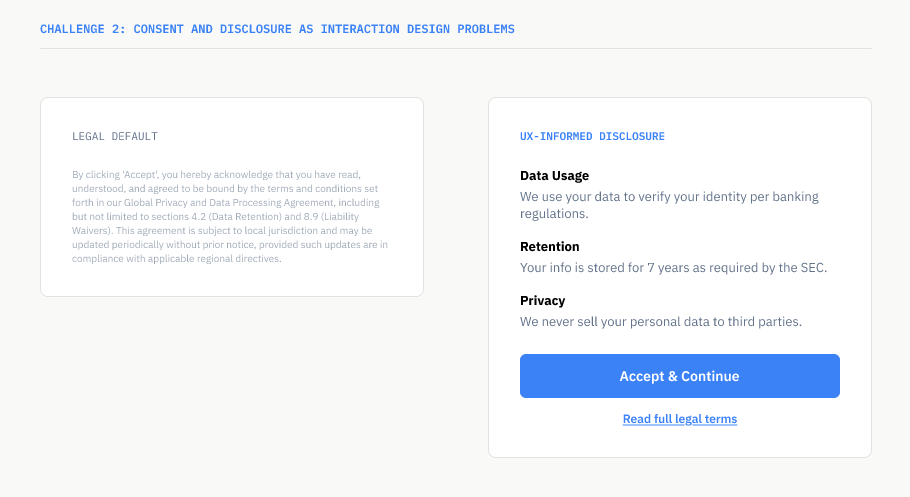
2. Consent and disclosure as interaction design problems. Nowhere is the gap between legal and UX thinking more visible than in consent flows and disclosure language. Legal teams default to exhaustive, liability-minimizing copy. Users default to ignoring it entirely like a pattern so consistent that researchers have called it the “privacy paradox.” The designer’s job is to make required disclosures genuinely legible and perhaps scannable. Do not hide them, but render them in plain language, at the right moment, in the right context. This is hard, important work.
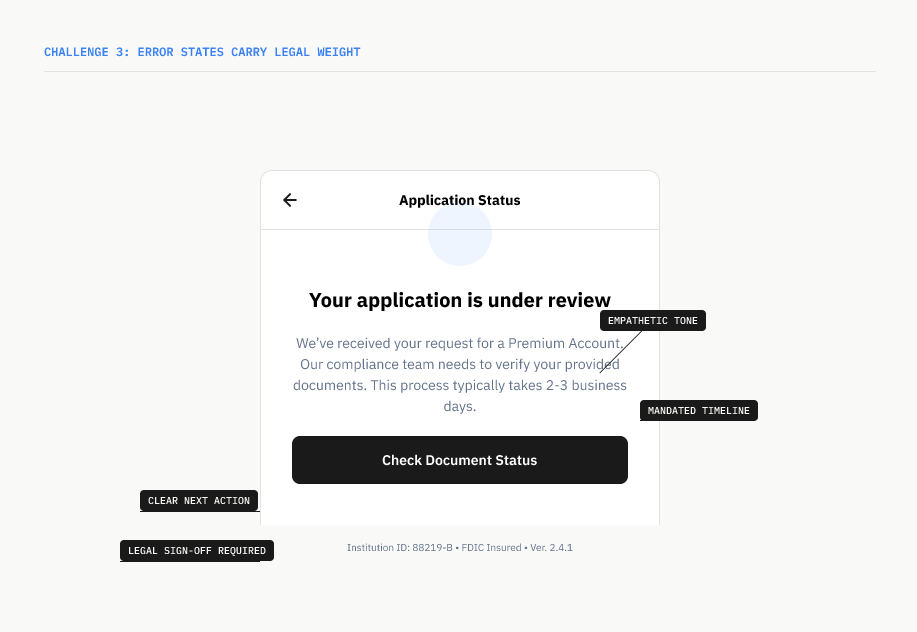
3. Error states carry legal weight. In a standard consumer app, a poorly written error message is a UX problem. In a banking or insurance interface, it can be a compliance violation. Every error state, every timeout message, every “your application is under review” notification needs to satisfy both emotional design principles and regulatory requirements for clear communication. As the Nielsen Norman Group notes, error messages are among the most neglected surfaces in product design in regulated industries, that they have become the most consequential.
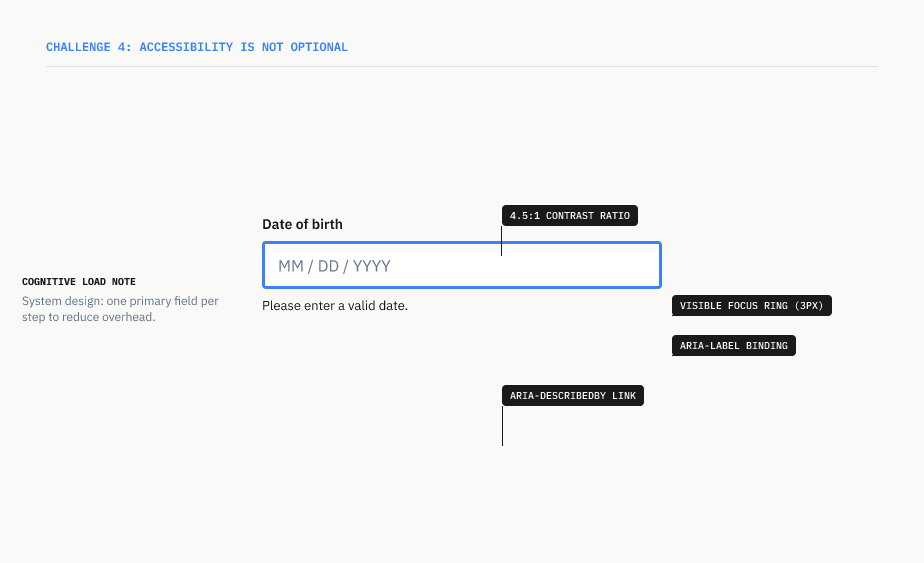
4. Accessibility is not optional. In most regulated sectors, accessibility is legally mandated, not aspirational. WCAG 2.1 AA compliance is a floor, not a ceiling. Yet as explored in this piece on inclusive design in financial services, the majority of fintech products still fail basic accessibility audits. For practitioners in these industries, accessibility fluency like color contrast ratios, screen reader compatibility, cognitive load reduction all have become a core professional competency, not a specialist skill.
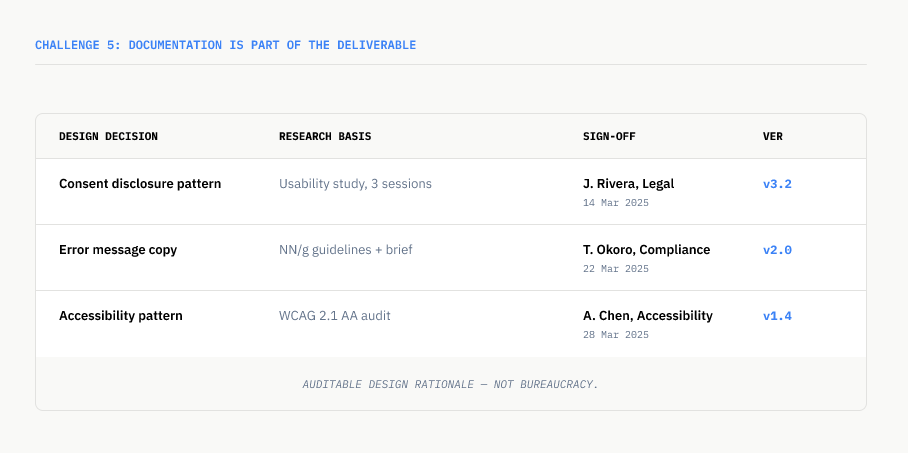
5. Documentation is part of the deliverable. This one surprises practitioners coming from agency or startup backgrounds. In regulated industries, your design decisions need to be auditable. Why did you use this disclosure pattern? What research informed this consent flow? Which version of this error message did legal sign off on, and when? Design rationale documentation — the kind that can survive a regulatory audit — is not bureaucracy. It is professional craft applied to a context most design education ignores. The case for rigorous design documentation has never been stronger than in regulated environments.
UX decision matrix that matters
Good intentions don’t survive a compliance review. What survives is a repeatable way of interrogating your own work before someone else does it for you. The matrix below is that mechanism. It won’t make the hard calls on your behalf, and it isn’t a substitute for judgment. What it does is guarantee you’re asking the right questions in the right order — surfacing the regulatory and audit dimensions of a decision at the same moment you’re weighing clarity and conversion, rather than three weeks later when it’s expensive to change.
The logic is simple: any design decision that touches a regulated surface has to clear four tests at once. Does the user genuinely understand it? Does it satisfy the relevant regulation? Does it still work as a business? And can you prove, later, why you made the choice you made? A decision that passes three of the four isn’t “almost there” — it’s a liability waiting for a launch date. The bar is all four, every time.
Regulated UX decision matrix
Apply before finalizing any screen, flow, or pattern in a compliance-sensitive product.
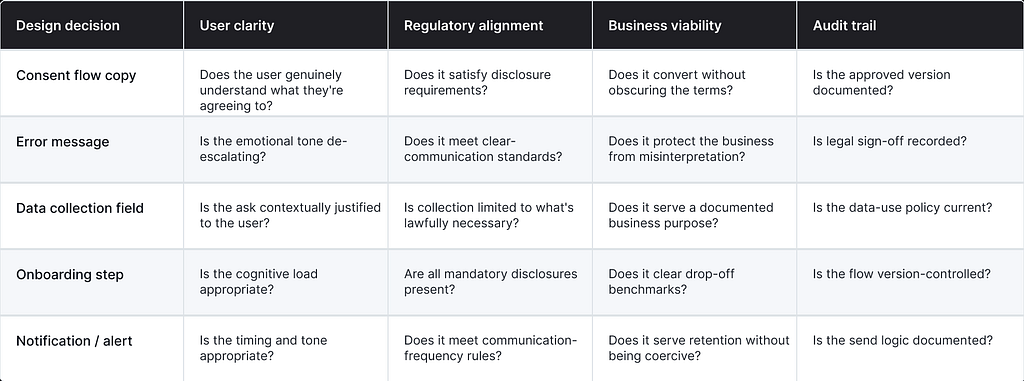
Save this matrix. Drop it into your team’s design system documentation. Run it in every critique that touches a regulated surface, so that “did we check with legal?” stops being a question someone remembers to ask and becomes a step the process can’t skip.
What this means for your practice
The survival guide, in the end, is short. Pull compliance upstream, into discovery, where it’s cheap to accommodate. Treat regulation as a user need wearing unfamiliar clothing. Document everything, because a decision you can’t defend is a decision you’ll eventually have to undo. And never mistake a clean-looking screen for a responsible one.
The best work you will ever produce in a regulated environment will be invisible — not because it’s generic, but because it takes something genuinely difficult and makes it feel effortless and safe. That is the hardest thing to design. It is also the most worth doing.
References:
– Financial Conduct Authority, setting higher standards of consumer protection across UK financial services: https://www.fca.org.uk/firms/consumer-duty
– Nielsen Norman Group, “Error-Message Guidelines” (updated 2024) — https://www.nngroup.com/articles/error-message-guidelines/
– The Fintech Times, “Inclusive by Design: How Banks Can Address the Accessibility Challenge”: https://thefintechtimes.com/inclusive-by-design-how-banks-can-address-the-accessibility-challenge/
– “Accessibility in Finance: Designing a Future Everyone Can Use” https://www.11fs.com/article/accessibility-in-finance-designing-a-future-everyone-can-use
– “UX for Privacy & Consent in 2025: Designing Trust in a Digital World,” https://medium.com/design-bootcamp/ux-for-privacy-consent-in-2025-designing-trust-in-a-digital-world-0e41906298e3
– MIT Technology Review Insights https://usercentrics.com/resources/privacy-led-ux-ai-trust/
Thanks for reading. If you design in fintech, insurance, healthcare, or anywhere the legal team has a seat at the table, I’d love to hear how you’ve made the compliance-as-constraint reframe work on your own team.
✔️ Find me on LinkedIn: https://www.linkedin.com/in/anandarup/
☕ Buy me a coffee: https://www.buymeacoffee.com/andybux007
See you in the next article 👋🏻
Designing in regulated industries was originally published in UX Collective on Medium, where people are continuing the conversation by highlighting and responding to this story.


