
And the different kinds of cute design techniques.

Many designers are applying cute design to their robots for good reason: research shows that cute design enhances social presence, helps people form attachments faster, and makes users more forgiving when things go wrong.
At CES in recent years, cute robots have been everywhere. The variety shows that cuteness in design has more layers than just the traditional ‘round shape, big eyes’ baby look.
Cuteness competition in robotics
Most designers know about the uncanny valley: when something looks almost human but not quite right, people feel uncomfortable. Studies found the tipping point is around 65% human likeness. To avoid this, designers either remove human features completely or stylize them. Many choose to make it cute because of the advantages mentioned earlier. And when it comes to appearance, there are three main kinds: baby schema, pet-like, and kawaii.
Baby schema cuteness
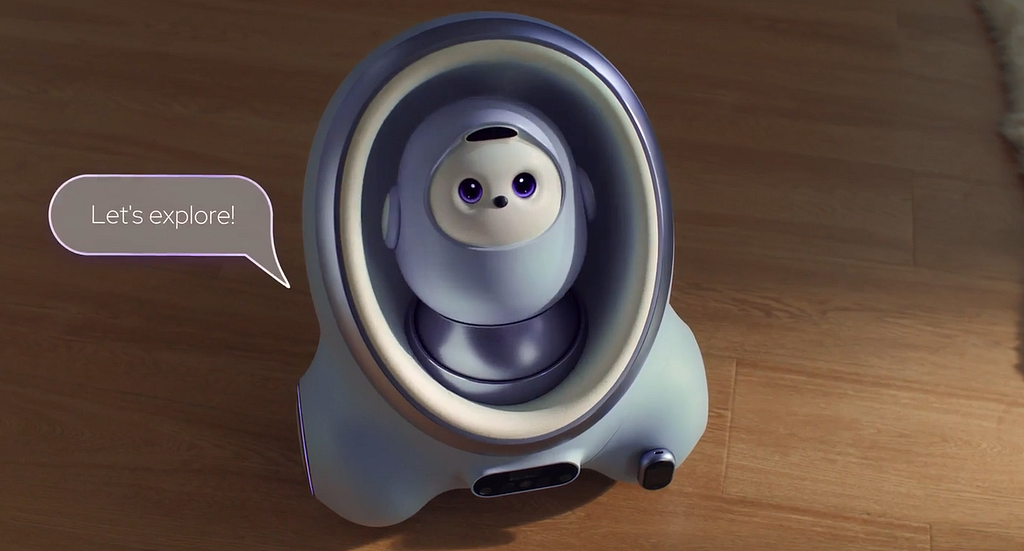
This is the most common approach: rounded shapes, large eyes, soft colors, and a high-pitched voice. Research suggests these features trigger an instinct to see something as vulnerable, which fosters attachment and empathy.
AiMe by TCL, first shown at CES 2025, is an example of this. It’s designed to act like a friendly family member with expressive digital eyes, cameras, and sensors to interact with people, record family moments, and monitor the home.
Pet-like cuteness
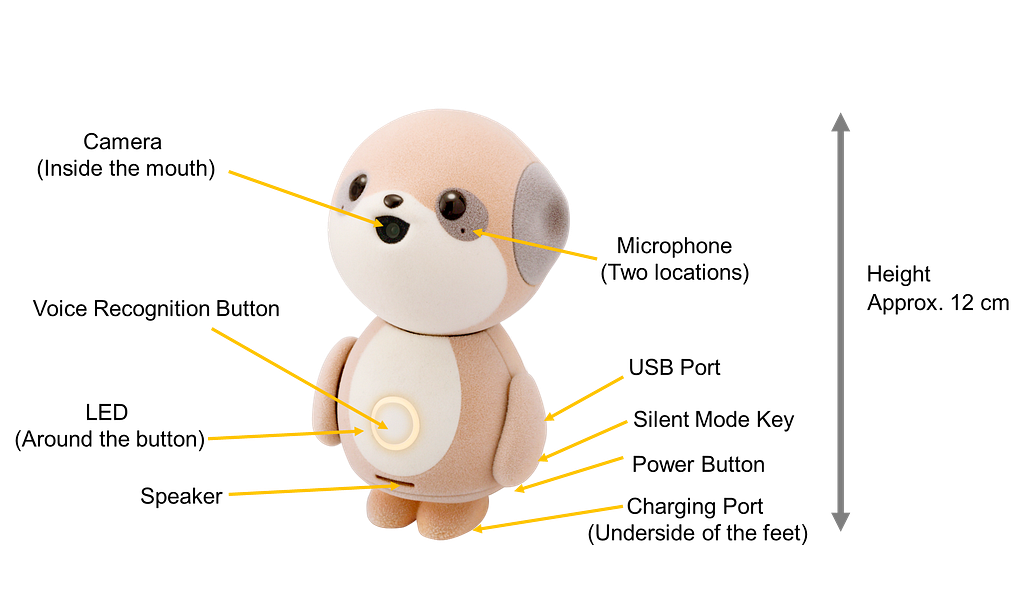
This approach mimics the behaviors and appearance of companion animals. Designers usually integrate animal-like behaviors such as wagging motions and head tilts to draw out emotional bonds with users.
One example shown at CES 2026 is Poketomo from Sharp. It’s designed to be both a personal assistant and a companion, providing emotional support and targeting single-person households.
Kawaii cuteness
Japan has developed its own style of cuteness known as kawaii, which means “cute” in English. It is a cultural aesthetic that doesn’t aim for realism. Instead, it focuses on innocence, minimal facial features, and playfulness. A famous example of this style is Hello Kitty.
Kawaii designs can look cute without resembling infants or animals. Their ambiguity leaves room for users to project their feelings or imagination onto the product.
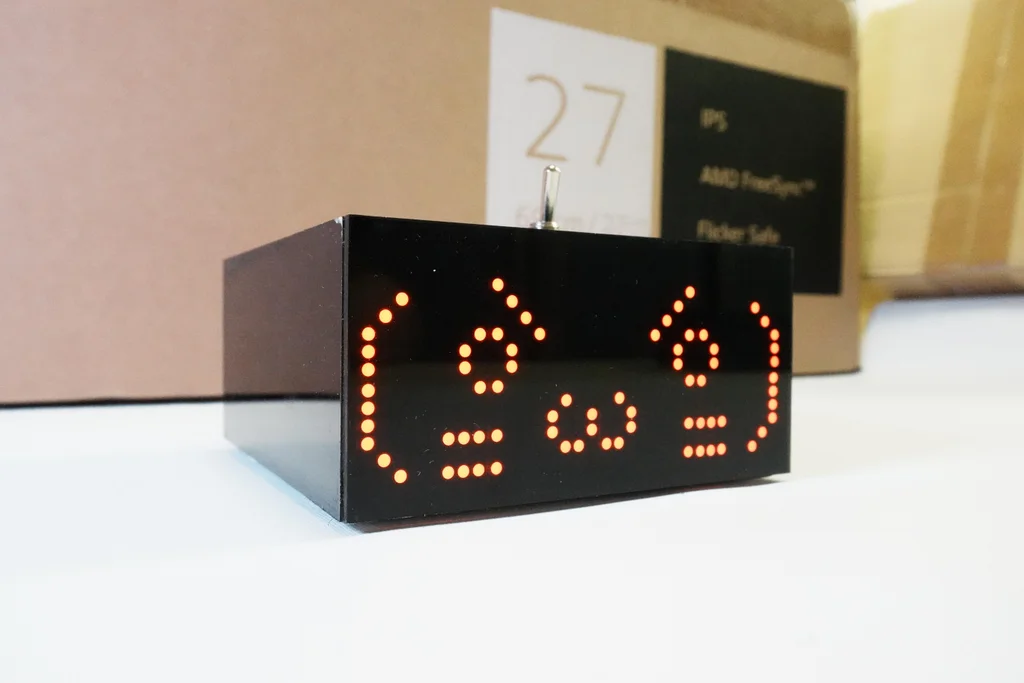
One example that fits this category perfectly is the open-source Kawaii Useless Robot. Its design is extremely simple: a square box with a large emoji on it. Its playful behavior and openness to self-expression create a likable, kawaii experience for users.
Even though I like cute design most of the time, sometimes it just tries too hard and starts to annoy me. I hit ‘cute fatigue’: tired of big eyes staring at me or a high-pitched voice. I can’t find much research on why this happens, but my guess is that some cute design feels manipulative. Like, ‘I know what you’re trying to do here, but it doesn’t work on me.’ So instead of ‘aww’, I feel disgust. Behavioral cuteness is different for me though. I love the playfulness and almost never get tired of it.
Behavioral cuteness
Products that focus on behavioral cuteness usually have very minimalistic designs, which lets them feel cute without looking childish.
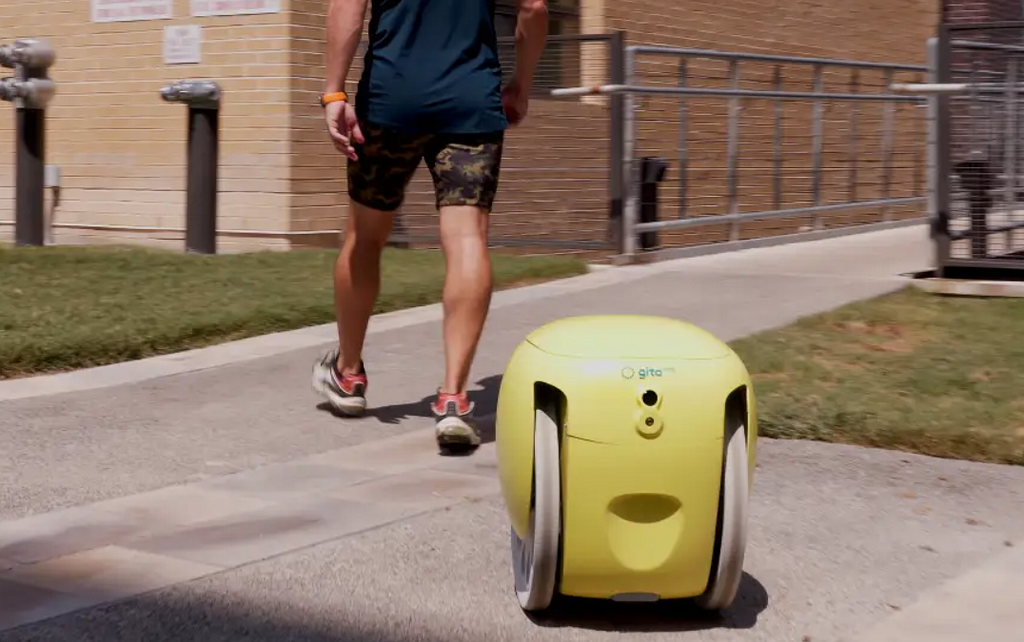
One of my favorite examples is Gita by Piaggio Fast Forward. Gita is a robot that identifies and follows its user while carrying their stuff. It makes lively movements, like leaning back when accelerating to catch up with its owner. According to its design team, they went on “field trips” to study how sheep move and observed geese to understand following behavior. Gita also makes simple sounds to convey its state and emotions, using symbolic audio instead of trying to mimic real creatures.
Another example comes from designer Hyerim Shin. Her sneezing toaster starts making wheezing sounds as the crumb tray fills up, and when you clean it, the toaster ejects the crumbs as if it’s sneezing.
Or… whatever the user thinks is cute
Humans are naturally good at forming emotional bonds with objects. People name their Roombas, feel empathy when delivery bots fall down stairs or get stuck in floodwater, and use words like “excited” or “anxious” to describe robots that don’t even have faces.
I always think about this story: a friend rented an iPad for three years. She’d talk about how cute and helpful it was, and when she had to return it, she couldn’t sleep the night before. That bond formed because the product genuinely brought value to her life. Designers can’t force that kind of connection, and if users sense they’re trying too hard, it backfires (like what it does to me). That’s why I appreciate subtle behavioral design: small cues that let users find their own playfulness and project their own emotions onto the product. The character comes from the user’s interpretation, not the designer.
The deceptive side of cuteness
Cute design can be powerful, but it needs to be used carefully. In the wrong context, like a professional setting, too much cuteness can make a product feel less trustworthy.
Some researchers have also warned about potential harms. A friendly, harmless appearance might make users feel too comfortable, leading them to share more personal information than they realize. Certain groups, especially kids, may develop unhealthy emotional attachments to products, making it harder to maintain healthy boundaries with technology.
Cuteness is more than just making things round and big-eyed. It’s about choosing the right type and amount for the context and audience, and every design choice should serve a purpose. Only when a product genuinely brings value will users start to appreciate its personality and bring their own meaning to the experience.
Reference:
[1] Dezeen. (2016, June 23). Kawaii home appliances explore the nature of cuteness. https://www.dezeen.com/2016/06/23/kawaii-home-appliances-cute-hyerim-shin-design-products-royal-college-of-art-graduate-show-rca-2016/ [2] Hunter, T. (2020, February 10). Why are robots so freaking cute? https://builtin.com/robotics/why-are-robots-cute [3] Kugler, L. (2022, August). Crossing the uncanny valley. Communications of the ACM, 65(8). https://cacm.acm.org/news/crossing-the-uncanny-valley/ [4] Piaggio Fast Forward. (n.d.). Gita robots. https://piaggiofastforward.com/ [5] Sharp Corporation. (2025, August 20). Sharp introduces conversational AI character “Poketomo” [Press release]. https://global.sharp/corporate/news/250820-a.html [6] TCL. (n.d.). TCL AiMe design story. https://www.tcl.com/global/en/tcl-design/design-works/tcl-ai-me-design-story [7] tobychui. (2024, August 9). Kawaii Useless Robot — 2024 edition. Instructables. https://www.instructables.com/Kawaii-Useless-Robot-2024-Edition/ [8] Yu, X., Xu, Z., Song, Y., & Liu, X. (2022). The cuter, the better? The impact of cuteness on intention to purchase AI voice assistants: A moderated serial-mediation model. Frontiers in Psychology, 13, Article 1036848. https://doi.org/10.3389/fpsyg.2022.1036848The deceptive side of robot cuteness was originally published in UX Collective on Medium, where people are continuing the conversation by highlighting and responding to this story.