
Explaining the Homo Metricus: someone who understands themselves based on scores in apps
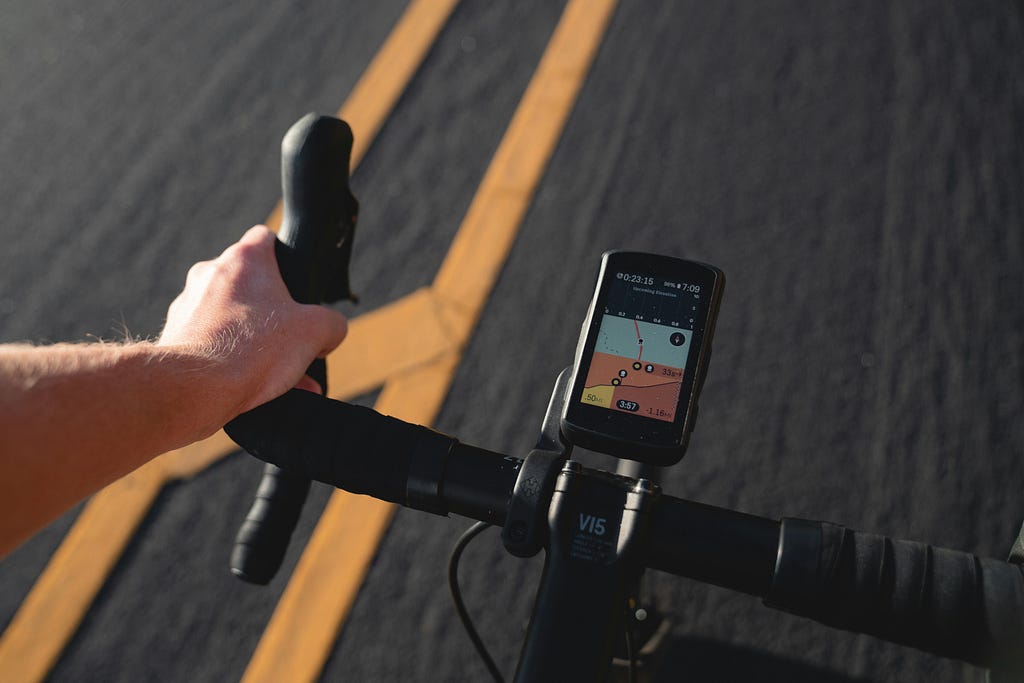
When I go cycling, my family asks how many kilometres I’ve covered. When I come back from a football match, the first question I hear is whether I scored. Or even better/worse, how many goals I scored. The answer is usually 0. People also ask me constantly what my running pace is. It seems that my workout life has been turned into data.
Sports activities are not the only domain to have become metrified. Productivity may be tracked in Jira, Duolingo streaks must be maintained at all costs, and 10,000 steps per day is an objective for many people. I have friends who say things like, ‘let’s exit the metro one station early, I need a handful more steps.’
Ironically (or not), I kinda like numbers. Knowing how far I have cycled, seeing my average speed, or how much power I produced on a climb is nice. It gives me a deeper understanding of how my workout went. As a geography nerd, I also like looking at the map after my ride so I can see where I went.
Analysing my bicycle rides was not something I’ve always done. I have been two different types of cyclists: the pre-smartphone dinosaur-boomer and the Strava cyclist. The old me would leave for a ride without an objective. If it started raining, I could decide to change my route on the fly. Furthermore, if I saw a café, I could stop for tea and an apple pie (with cream during the off-season). Or when a friend texts me, I might decide to take a detour to visit them. There was no real reason why my ride had to continue according to the plan. In fact, there was not much of a plan. I just went out to enjoy my bicycle, the mountains, and the sun.
Today, I operate in a different reality. The Strava-me uses a GPS bike computer, heart rate monitor, and power meter. My ride is translated into data. Cadence, power, speed, and my workout/interval structure are displayed on a screen on my handlebars. When my heart rate is too high, the bike computer tells me to slow down. When power output falls below a target (this is usually the case), the screen turns red because I need to step up my game. At least the colour of the screen matches the colour of my face.
This way, I am always informed by metrics as I act. The metrics then cause me to adjust my behaviour accordingly. You might say that this is a sign of progress. New technology gives me better information. It helps me train and prevents me from pushing myself into physical misery. Strava tells me where I am and tells me where I should go.
Why wouldn’t I want this? Is there really any reason why I would reject access to data? Well, I sometimes want less information. This is because data changes the experience of my rides.
Think about what happens when I am cycling up a mountain pass in my lovely backyard of the French Alpes-Maritimes. Without a bike computer, I focus on my body. I feel my legs and my breathing. I also sense the gradient, the temperature, and the wind. I have the illusion that I am in tune with myself and my environment. As a result of these observations, I might push harder or slow down. Spoiler: I usually slow down.
In contrast to this offline form of cycling, the bike computer and Strava introduce a metrified authority to the experience. The screen tells me whether I am above or below my target. This way, the metric begins to compete with the sensations that my body gives. In fact, the metric can become a more important authority for understanding the activity than the body.
I may slow down before reaching my biological limit because the bike computer notifies me that my intensity is too high. I might believe that my workout was really difficult because Strava’s Relative Effort Score tells me that it was, even when my body suggests otherwise.
As a result, I interpret my body through data. As a traditional cyclist, I rely on signals from my body and the world to sense how the ride is going. The online me relies on the metric as authority. Consequently, the tech platform represents the body more than the body represents itself.

It’s not a surprise that my cycling coach (a real person, not an AI agent) sometimes prescribed me workouts where I had to turn off my screen. He was right, of course. I can only be a good cyclist if I understand my body.
The homo metricus
In order to get a good understanding of how our behaviour has changed over the last 2 decades, I want to present some theory. I want to introduce a term to describe a form of a person who is primarily driven by numbers: The homo metricus.
The homo metricus understands and governs itself through algorithmically defined metrics.
Let’s unpack what it means to be a homo metricus. The difference between the offline cyclist and the homo metricus is that they inhabit different environments. Two cyclists can cycle an identical route. They’d travel the same distance, in the same time, in the same weather. Yet, they experience different realities. For one, stopping at a café or taking a detour is a choice. For the other, these alternative actions deviate from the workout structure. The homo metricus is guided by a responsive system and wants to follow the incentives and data given to them. This system removes impulsive options.
An app doesn’t need to tell me that I shouldn’t stop for coffee. It only needs to make stopping for coffee invisible to the workout. What once was a free ride turned into a training session. This training session is just a set of measurable targets that are captured in metrics. And the metrics have become something I want to improve.
I’ve enjoyed this process of improving for a long time. I even had spreadsheets with all sorts of calculations. But to what extent is this desire for improvement something I decide entirely for myself? My app gives me metrics that define what counts as improvement. I want more power, a lower heart rate, a higher cadence, a higher fitness score, etc.

Metrics command without commanding
You might think, ‘yeah, he’s just describing the professionalisation of a sport.’ But the tendency to capture value in a number is being applied to all aspects of our life. We have an Uber Passenger Score, a follower count on our Social Media profiles, a health score from our wearable, daily steps, Stack Overflow or Reddit contribution scores, etc.
There is always another number to improve. Metrics beg for improvement. When I see that my Airbnb rating is 4.72 stars, I might be happy. Yet, if I know that the average is 4.8 stars, I might be disappointed. The number has turned an experience into a comparison. I have a benchmark I relate my numbers to. Ultimately, comparison creates a target. No one wants to be below average.
Metrics don’t directly tell us what to do. Instead, they provide context about our actions. For instance, a fitness score is low, so I realise I should exercise more. My Airbnb rating is low, so I conclude I should throw away the bin bags and clean the sink before I check out.
As a result, the metric leads to a particular way of understanding behaviour. I tell myself that I perform instead of just cycling. I don’t simply have a pleasurable ride, but I have achieved a certain score. I don’t learn Korean, but I maintain my Duolingo streak. I don’t comment under a YouTube video, but I’m harvesting likes. Our activities become legible through the metric. This way, the app can use data to tell me what to do next.
Creating data to train the platform
The relationship between data and the user works both from user to app and from app to user. I produce data by cycling, scrolling, or ordering food through a delivery app. The system learns from that data. It then changes what it shows me.
If I often ignore a recommendation, the platform learns more about me. As a result, the app adjusts its assumptions. It starts to understand my motivations (or lack thereof) better. Bit by bit, the system learns how to govern each individual user.
This creates an odd feedback loop. I act. The app tracks me and learns from this measurement. The app changes its UX, and I respond to these changes. The app then measures my response. The loop continues.

My behaviour becomes data, and the data becomes knowledge. The knowledge becomes a recommendation that consequently changes my behaviour. My new behaviour becomes data. The cycle never ends.
Adaptability based on new data is a defining characteristic of the tech environment in which we now live. Users constantly respond to what they and others do. The price of an Uber ride changes because other people are travelling. The content in my social media feed changes because of what I and others watched yesterday. My workout recommendations change because of what I did last week. The system is constantly adjusting itself around me and my peers. Ultimately, I am constantly adjusting myself based on what is shown to me by the app.
Getting used to metrics
We measure many aspects of our lives. Of course, some people do this more than others. We might track our sleep, daily steps, caloric intake, productivity, finances, social media conduct, travel habits, and many more aspects of our daily actions and status in society.
Because we measure these things, we can improve them. Or at least, that is what we make ourselves believe. Yet, we need to understand what counts as ‘better.’ The definition of what ‘better’ means is often hidden inside the algorithm or metric and is incomplete. The number does not tell me what a good life is. It tells me what can be measured about my life. These are obviously not the same thing.
The longing for metrics becomes obvious when I stop cycling with my bike computer. Bizarrely, if I were to go back to cycling without a bike computer, it would probably feel uncomfortable. Continuous feedback has become the norm for me, as a homo metricus. While I first needed nothing more than a bicycle and a road, for the new me, it feels like something is missing if I don’t have my data. Without cadence, heart rate, or power data, I have less information to understand my ride.
The absence of metrics can therefore begin to feel like an absence of knowledge. I have spent ages learning to trust my own judgement. Yet I have also spent years learning to trust the numbers. And numbers allow me to compare today with yesterday or six months ago based on ‘objective facts.’
Making mistakes
Relying on metrics also means that I untrain myself to discover mistakes and think for myself. The old me would cycle up a climb way too enthusiastically and too fast. I would ‘blow up’ physically, but I would learn from overestimating my own capabilities. With Strava, I would stare at my power output and just follow the number. If I need to slow down, the computer will tell me.
Using real-time metrics means that the moment of evaluation is moved more from after the activity to during the action. The old cyclist acts and then learns. The new cyclist acts while being evaluated. The homo metricus acts while always being evaluated. I am informed before blowing up.
The homo metricus might not understand the consequences of wrong decisions. It might never make wrong decisions in the first place.
Maybe this is why Strava knows me better than I do? Well, of course they don’t. An app doesn’t understand me. But I have put my own understanding in the hands of the app. I allow the platform to define which parts of me matter. I allow the app to define what I believe should be understood about me.
Speed, power, heart rate, and a Relative Effort Score all matter to me. The café and apple pie or the detour to visit a friend probably don’t. The platform doesn’t have to tell me these things are worthless. It just doesn’t measure them.
Similarly, if helping a colleague doesn’t contribute to your measurable quarterly targets, you might be less inclined to do it. If you know that a certain type of content doesn’t lead to many likes, you might not post it anymore.
Metrics and reality
What isn’t measured becomes harder to see. This is not an argument for throwing away my bike computer. I will surely continue using it. I like analysing my rides through all the data available. I also like the process of improving and showing off my efforts to my followers. And I want to keep track of which roads I cycled and how much distance I covered.
However, using metrics becomes problematic if we forget that they are metrics in the first place. We should remember that metrics are just random numbers. A metric is not the experience. A score is not the person. A number can tell me something about myself without telling me who I am.
My bike computer doesn’t measure me. But it tries. It shows a part of my reality. I then focus on this limited reality and forget about the aspects that the metric leaves out. Likewise, my Uber or Airbnb score doesn’t tell me whether I am a nice person, but it attempts to. Instagram or TikTok doesn’t indicate popularity, but it works this way regardless. Because we treat it like this.
Numbers don’t control or instruct directly. Yet, they do. Numbers are just information. But with that information, people adapt their behaviour. The platform provides the metric. The homo metricus does the rest.
The metrics dictate our behaviour. We are all a homo metricus to a certain extent. How much everyone is guided by metrics depends on the person. But be honest with yourself… which metrics do you try to maintain at a high price? Think about it. I will now verify how many people clapped for this article and link my self-worth to these results.
This article covers a very limited message of my upcoming book with the working title “Homo Metricus — How smartphone apps change what it means to be human.” In the upcoming period, I will post more insights to explore the relationship between humanity, tech platforms, and metrics.
Sources
My ideas are partially a contemporary bastardisation/reinterpretation of Michel Foucault’s later work. Other philosophical theories that cover related social problems can be found in the writings of Alain Supiot, Gilles Deleuze, and Herbert Marcuse.
.
How apps know us better than we do and influence our decisions was originally published in UX Collective on Medium, where people are continuing the conversation by highlighting and responding to this story.


