

From healing fiction to smart feeders, the booming pet economy shows what design looks like when households shrink instead of grow.
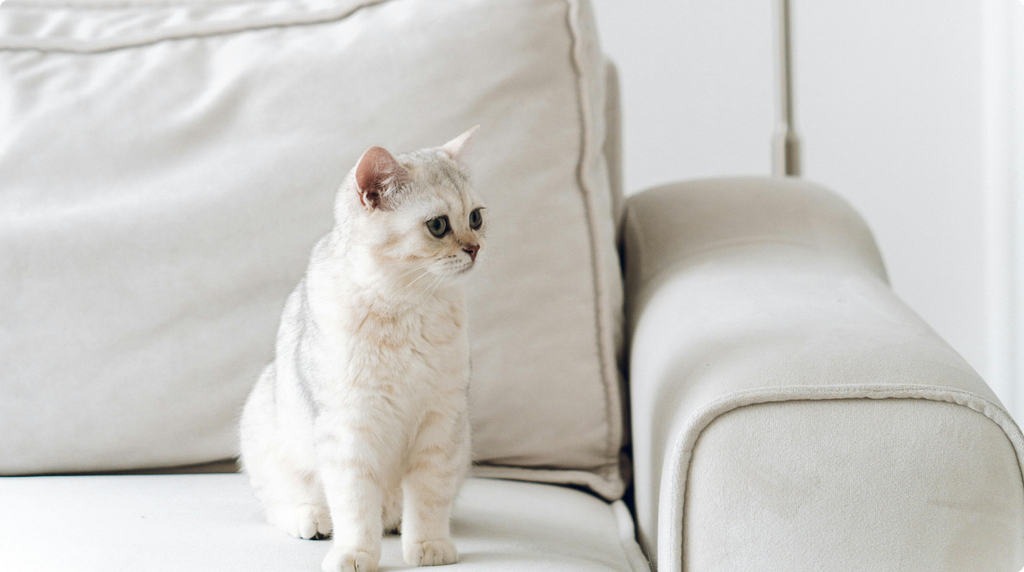
Walk into a bookshop in Britain or the US, and you will find a table, usually near the front, stacked with novels about cats. Not children’s books. Gentle, faintly magical stories for adults, in which a cat narrates, or saves a bookshop, or guides a lonely person back towards other people. The Travelling Cat Chronicles. The Cat Who Saved Books. We’ll Prescribe You a Cat. The covers are soft and pastel. The mood is unfailingly kind.
It’s not just a handful of curiosities any more. Translated Japanese fiction made up a quarter of the category’s UK sales in 2022, and within two years it accounted for 43% of the top forty translated titles. The cat on the cover has become such a reliable selling signal that, as one translator told the Guardian, publishers now reach for it whether or not there is actually a feline in the book. A good share of these titles lean on the same handful of motifs: a cat, a café, a bookshop, and a quietly unhappy person who is slowly mended by all three.
The genre has a name in Japanese. Iyashikei, usually translated as “healing fiction”, describes anything soothing and restorative, and the form has thrived in manga and anime for decades before the rest of the world noticed. Its rise abroad is not really about cats, though. What travels is the solace they represent in these stories: undemanding company, a presence that soothes rather than takes, a small warm thing to care for when the larger structures of a life feel cold or absent.
There is something to notice here, because the same impulse is surfacing somewhere far less cosy. It is bobbing up in spreadsheets.
The household has quietly changed shape
Across much of the rich world, the home is contracting. People are marrying later or not at all, living alone in greater numbers, and having fewer children. The fiction is one reflection of it. The economy is another, and the latter happens to keep better records.
Start with Japan, since that is where the pattern is most advanced. Cats overtook dogs as the country’s most-kept pet around a decade ago (with roughly 8.8 million cats to 6.8 million dogs), though the more telling detail is that the overall pet population is now easing off its peak. The boom is less about more animals than about how much is lavished on each one.
Cats alone account for an estimated ¥2.9 trillion in spending in 2025, half-jokingly dubbed “catnomics”. The same years have seen the fertility rate fall to a record low of 1.20, its eighth consecutive annual decline. The two are not cause and effect so much as twin signs of a country reshaping around smaller households. The cat is not an arbitrary winner here. It suits the conditions: independent, content in a small flat, easy to keep when space is tight and time is short.
None of this is unique to Japan, and it would be a mistake to read it as a story about one country. The same forces are visible across the region and beyond. In South Korea, people living alone now make up 36.1% of all households, more than any other arrangement, according to the Ministry of Data and Statistics.
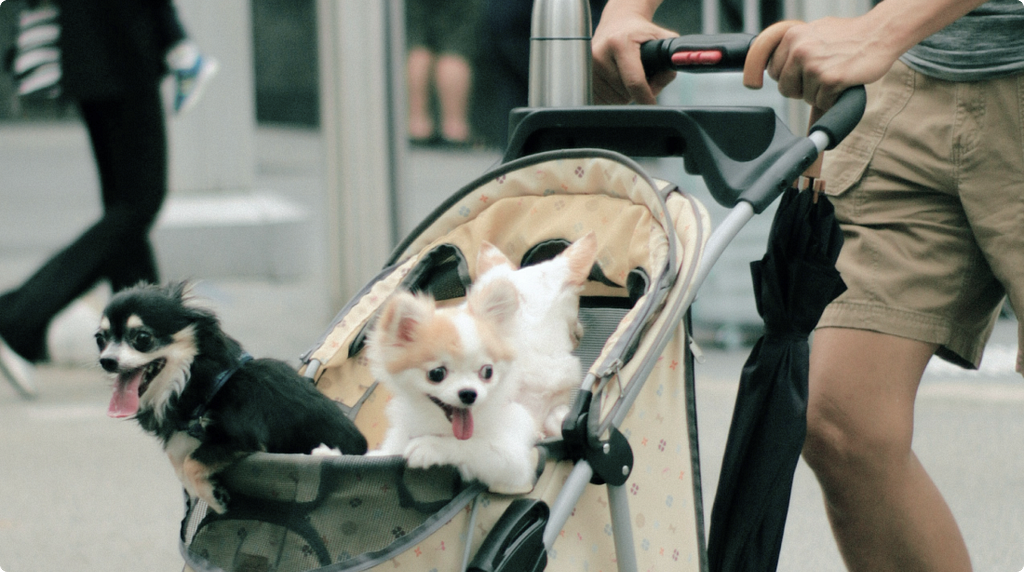
Locals have coined their own vocabulary for the shift, including petfam and petconomy. The single most striking data point comes from Gmarket, the country’s largest online marketplace, where pet strollers outsold baby strollers in 2023. The pushchair, perhaps the most literal symbol of raising a child, is now more often bought to carry a fluffy animal.
China shows the same thing at scale, and with the sharpest business consequences. Goldman Sachs projects that pets will outnumber young children there by roughly two to one by 2030.
Where the dependents go, the money follows: Bloomberg puts the country’s pet economy at around $49 billion. The shift even reaches the factory floor. As China’s infant-formula market shrank by 21% between 2021 and 2024, the same companies began eyeing pet food as an escape route. A supply chain built for babies is being repurposed, quite literally, for cats and dogs. One analyst put it plainly: they need a way out.
The West is further behind on the demographics but tilting in this direction too. In the United States, households with pets have overtaken those with children, and pet ownership has climbed to around seven in ten homes even as the birth rate has slipped. A 2024 poll found that 43% of Americans say they would rather have pets than kids, a preference strongest among the youngest owners, who also spend the most. The labels differ from market to market, but the trajectory is shared.
The fur-baby question, handled honestly
It might be tempting to draw a straight line from all this to a simple, slightly scolding conclusion: people are choosing pets instead of children. The framing is everywhere, and it is mostly wrong, or at least far more tangled than the headlines suggest.
In one sense, the substitution is unmistakable. Surveys consistently find that large majorities treat their pets as family, that the “fur baby” label skews heavily towards younger generations, and that owners happily call themselves mum and dad. The spending, the language and the emotional weight all run one way. People are pouring the resources and the tenderness once reserved for a dependent into a furry companion.
But the causal version, pets instead of babies, is far shakier than it seems at first glance. The research is genuinely split. Some small qualitative studies of child-free owners do find people framing pets as surrogate children and a reason to delay or skip parenthood.
Others find the opposite, that stronger attachment to a pet goes alongside greater concern for the next generation, not less. A study from 2021 examined pet attachment and fertility intention, and concluded that the relationship is conditional rather than a simple substitution.
The organisations that study fertility most closely, such as the Institute for Family Studies, consistently point elsewhere for the real causes: later marriage, the cost of raising a family, and economic insecurity. The decline in birth rates is too broad, across too many countries, to be explained by people simply preferring kittens.
So the honest synthesis is this. Pets are not causing the household to shrink. But they are increasingly occupying the role, the budget and the daily rhythm that a child once anchored. The substitution is not a choice people are making at a fork in the road. It is what fills the space when the household contracts for other reasons. And for anyone who designs products, that distinction matters, because design does not follow people’s stated intentions. It follows the shape of the home as it actually is.
The prototype hiding in the pet aisle
The cat novels and the pet-food spreadsheets turn out to describe the same world.
A vast amount of product thinking still assumes a growing household. More people, more needs, more rooms to fill, a logic of expansion. The family that adds members and accumulates. It is baked into how we tend to imagine users: the busy parent, the growing family, the home that needs more of everything over time.
The pet economy is a working prototype of what design looks like when that assumption is removed. Look at what has been built around the companion animal in these markets.
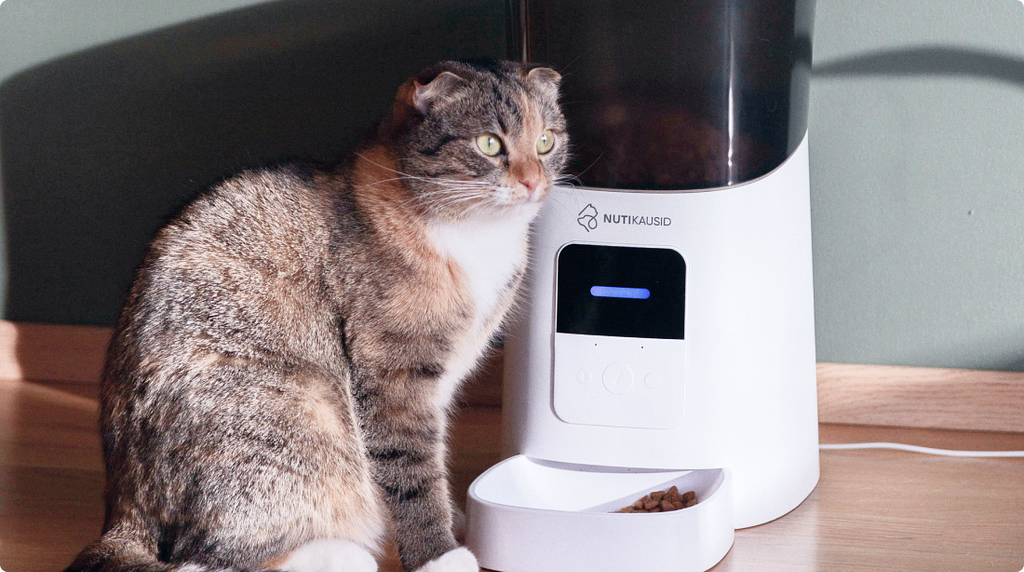
App-controlled feeders and cameras for the owner who is out all day. GPS collars. Pet insurance and chains of animal hospitals. Premium, functional food engineered like human nutrition. Internet-connected appliances with dedicated pet modes from the likes of Samsung and LG. Pet-friendly cafés, hotels and even sections of public transport. This is an entire product ecosystem organised not around a household that is growing, but around the careful tending of a single beloved dependent in a home that is small, quiet and often occupied by one person.
That is the template to watch, because the companion animal is just the first and most charming instance of it. The same underlying conditions, ageing populations, solo living, the search for low-effort connection, are already reshaping other categories. Elder-care technology. Products designed for the single occupant rather than the family of four. The entire emerging field of design aimed at loneliness, presence and reassurance rather than productivity or growth. The pet sector simply arrived early, because the cat is an easy, joyful thing to build for.
And this is where iyashikei earns its place in the argument rather than just its place on the bookshelf. The healing novel and the smart feeder answer the same question. Both are designed to soothe. Both assume a person who is tired, possibly isolated, and looking for a relationship that gives without taking. The genre names a feeling that the products serve without naming. Ageing populations and solitary living are what make a soothing genre and a comfort economy flourish. The solace and the loneliness are two readings of one situation.
Care you can’t fake
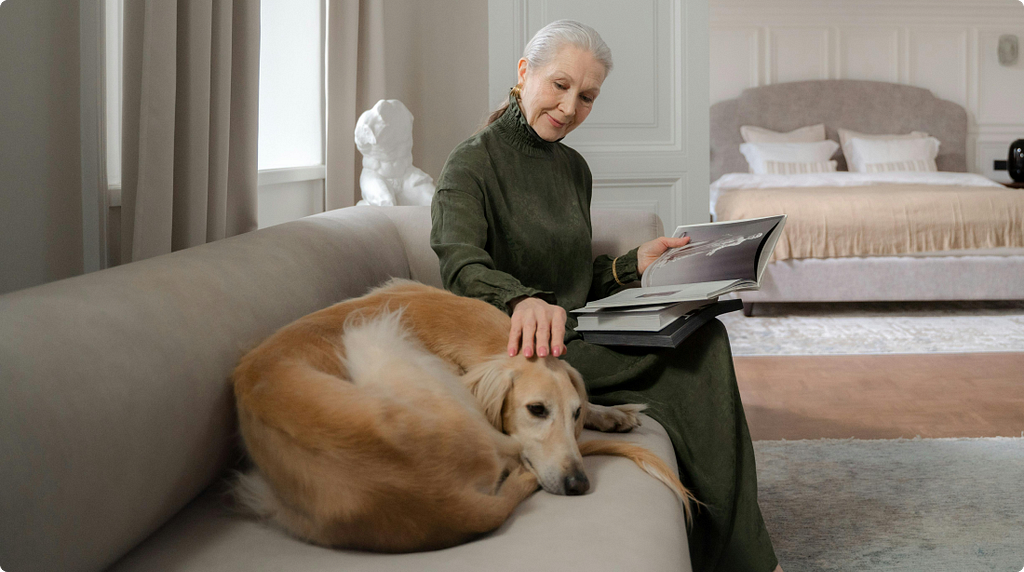
A note of scepticism belongs here too. Publishers have started imitating the cat-and-café formula so reflexively that it has tipped into something superficial, a set of motifs applied because they sell rather than because they mean anything. Companies face exactly this temptation: to slap “wellness” and soft edges onto a product as decoration, a gesture at care rather than the real thing. The lesson of the genuinely good healing novel, and the genuinely good companion device, is that the comfort has to be structural. It has to actually reach the person it claims to help.
None of this is a new universal user, to be clear. The growing family has not gone anywhere, and most of what gets built will still serve households that look nothing like the almost-empty flat with one cat in it. The argument is narrower and, I think, more useful: this is one rising pattern among many, and it is currently underserved relative to how fast it is growing. A few things about it are worth keeping in view.
- The default assumption of an expanding household is the thing to question. For a widening slice of users in these markets, the real home is a single person tending one dependent in a small space. That is a case to design for, not the rule.
- Companionship is starting to behave like a product category in its own right. Presence, reassurance and low-friction company are the jobs some of them now do, the way they already do for the smart feeder and the healing novel.
- Where care is the selling point, it has to be built in rather than styled on. Soft edges and a reassuring label are decoration. The products that succeed are the ones that actually answer what a tired, often isolated person needs.
- The adjacent sectors are worth watching. Elder-care technology and solo-living design are moving in the direction the pet economy already went. The cat got there first because it was the easiest thing to build for, not because it is the whole story.
So the question underneath the cat books and the pet strollers and the repurposed formula factories is not really about animals at all. It is this. For a couple of centuries, we have mostly designed for households that grow. What might it mean to design well for households organised around care instead? Smaller, older, often alone, wanting less to accumulate and more to be gently kept company. The feline paved the way. The rest of design is only beginning to follow.
If you enjoyed this, follow me on Medium for more on design, psychology and technology.
References & Credits
- Allianz Global Investors (2025). The humanisation of pets in Asia. https://www.allianzgi.com/en/insights/outlook-and-commentary/humanisation-pets-asia
- Bloomberg (2025, March). As China’s Birth Rate Drops, Pampered Pets Reap the Benefits. https://www.bloomberg.com/news/features/2025-03-11/china-s-birth-rate-is-falling-but-pets-are-reaping-the-benefits
- The Booker Prizes (2024). Why fiction from Korea and Japan has become so popular with English-language readers (Nielsen BookScan figures). https://thebookerprizes.com/the-booker-library/features/why-fiction-from-korea-and-japan-has-become-so-popular-with-english
- GlobalPETS (2025, May). Japanese cat market spending expected to near ¥3 trillion in 2025. https://globalpetindustry.com/news/japanese-cat-market-spending-expected-to-near-¥3-trillion-this-2025/
- Harris Poll, via PetfoodIndustry (2024, November). Study: 43% of Americans prefer pets over children. https://www.petfoodindustry.com/pet-food-market/market-trends-and-reports/news/15707952/study-43-of-americans-prefer-pets-over-children
- Institute for Family Studies (2024, August). Women Want More Children Than They’re Having. America Can Do More to Help. https://ifstudies.org/blog/women-want-more-children-than-theyre-having-america-can-do-more-to-help
- Korea Herald (2023, December). More strollers sold for furry companions than infants. https://www.koreaherald.com/view.php?ud=20231225000083
- Korea Times (2025, December). Single-person households become largest household type in Korea in 2024. https://www.koreatimes.co.kr/southkorea/society/20251209/single-person-households-become-largest-household-type-in-korea-in-2024-data
- Laurent-Simpson, A. (2017). “They Make Me Not Wanna Have a Child”: Effects of Companion Animals on Fertility Intentions of the Childfree. Sociological Inquiry, 87(4). https://onlinelibrary.wiley.com/doi/10.1111/soin.12163
- LG. PuriCare air purifier with Pet Mode (product page). https://www.lg.com/sg/puricare/air-purifier/as65gdst0/
- National Association of Realtors (2024, August). A Stunning Stat for International Cat Day: There Are More American Households with Pets Than Children. https://www.nar.realtor/blogs/economists-outlook/a-stunning-stat-for-international-cat-day-there-are-more-american-households-with-pets-than-children
- NBC News (2024, August). China will have nearly twice the pets as young children by 2030, Goldman Sachs says. https://www.nbcnews.com/news/world/china-will-nearly-twice-pets-young-children-2030-goldman-sachs-says-rcna165695
- Nippon.com (2024, June). Japan’s Fertility Rate Drops to New Record Low (Ministry of Health, Labour and Welfare data). https://www.nippon.com/en/japan-data/h02015/
- PetfoodIndustry (2026, February). Japan’s dog population improves, cats’ plateaus. https://www.petfoodindustry.com/pet-food-market/market-trends-and-reports/news/15817644/japans-dog-population-improves-cats-plateaus
- Samsung. Pet Care home appliances (product page). https://www.samsung.com/uk/home-appliances/pet-care/
- Su, B. et al. (2021). Can Pets Replace Children? The Interaction Effect of Pet Attachment and Subjective Socioeconomic Status on Fertility Intention. https://www.ncbi.nlm.nih.gov/pmc/articles/PMC8394147/
- The Guardian (2024, November). Surrealism, cafes and lots (and lots) of cats: why Japanese fiction is booming. https://www.theguardian.com/books/2024/nov/23/japanese-fiction-britain-translation
Designing for care, not growth was originally published in UX Collective on Medium, where people are continuing the conversation by highlighting and responding to this story.


